cabinet solutions

Cabinetry Solutions that Save Money and Refresh Your Home: A Powell Painting And Home Services Family Guide

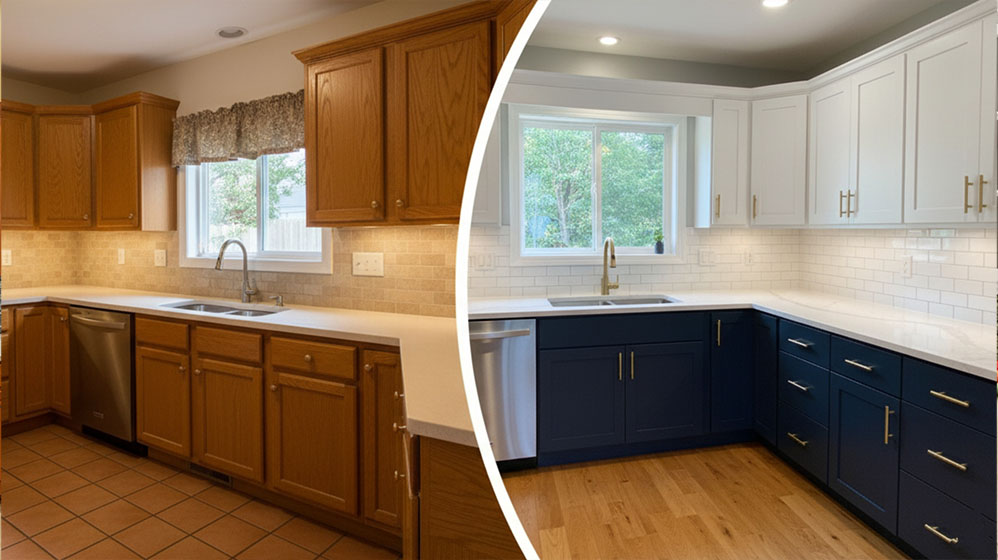
In today’s economy, homeowners are tightening belts while still aiming for a fresh, updated look. Replacing kitchen or bathroom cabinets can be a major expense. The good news: you don’t have to abandon your dream space. At Powell Painting And Home Services, a family- and veteran-owned company, we specialize in affordable cabinetry finishing and refinishing that delivers a completely updated look without the hefty price tag.

Why cabinetry finishing is a smart choice right now

Cost savings:
Refinish or update the existing cabinets instead of buying new ones. You can achieve a near-new appearance at a fraction of the cost.

Less disruption:
Finishing projects typically take less time than a full demolition and replacement, so your daily routine isn’t as disrupted.

Sustainability:
Choosing to refinish extends the life of your current cabinetry, reducing waste and supporting eco-friendly home improvements.

Customization on a budget:
Change colors, finishes, hardware, and textures to tailor the space to your taste without a full remodel.

Our family-and-veteran approach

Powell Painting And Home Services is built on three core pillars:

Family values:
We treat your home as if it were our own. Clear communication, reliability, and respect for your space are non-negotiables.

Characteristics:
Slightly thicker film than translucent stain
Provides a good balance of color and wood grain visibility
Lasts approximately 2-4 years

Veteran discipline:
We bring precision, accountability, and a strong work ethic to every project, ensuring high-quality results on schedule.

Comprehensive scope:
From prep to finish, we handle all steps—consultation, color selection, sanding, priming, finishing, and hardware updates—so you don’t have to coordinate multiple trades.

Cabinetry finishing options we offer

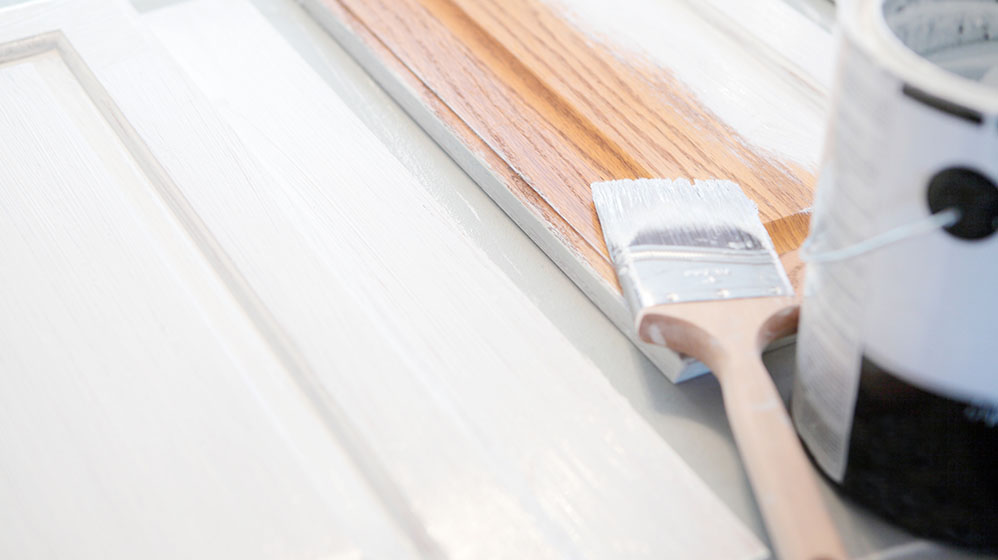
Refinishing (stain or paint):
Restore color and depth, or completely change the tone of your cabinets. Options include classic wood stains, bold modern hues, or timeless neutrals.

Glazing and distressing:
Add character with a subtle glaze to bring out details or distressing for a worn-in, vintage feel. Works beautifully with shaker, traditional, and farmhouse styles.

Camu/Whitewashing and limewash effects:
Lighten dark woods or create a soft, airy look with a modern or coastal vibe.

Cabinet hardware updates:
Changing knobs, pulls, and hinges can dramatically alter the appearance with minimal effort and cost.

Door skin and veneer refresh:
If doors are in good shape but look dated, we can apply new veneers or skins to modernize their surface.

Countertop and backsplash coordination:
We help you plan finishes that complement updated cabinetry, tying the whole room together.

The process: from idea to finished look:

Initial consultation (virtual or on-site)r:
We discuss your goals, budget, and timeline. Aesthetic preferences, color swatches, and photos help us propose the best plan.

Color and finish selection:
We guide you through finish options, sheen levels (matte, satin, semi-gloss), and hardware styles to achieve your dream look.

Preparation and protection:
We expertly sand, fill gaps, and protect floors and surrounding surfaces for a clean, durable result.

Finishing application:
Our skilled team applies high-quality primers and topcoats, ensuring even coverage and lasting durability.

Hardware update and final touches:
We install new hardware and perform any fine-tuning to guarantee doors close perfectly.

Clean-up and review
We leave the space pristine and walk you through the finished project, making sure you’re completely satisfied.

Design trends we’re seeing in 2025

Two-tone cabinets:
Lower cabinets in a deeper shade with lighter uppers to brighten spaces.

Near-white woods and soft neutrals:
Subtle warmth without stark contrast.

Matte and satin sheens:
Sleek, modern finishes that disguise fingerprints and wear.

Textured finishes:
Subtle glazing or subtle brush marks to add depth and character.

Hardware as a statement:
Bold brass, matte black, or brushed nickel pulls to elevate the look.

difference stains

Understanding the Differences: Translucent, Semi-Transparent, Semi-Solid, and Solid Stains

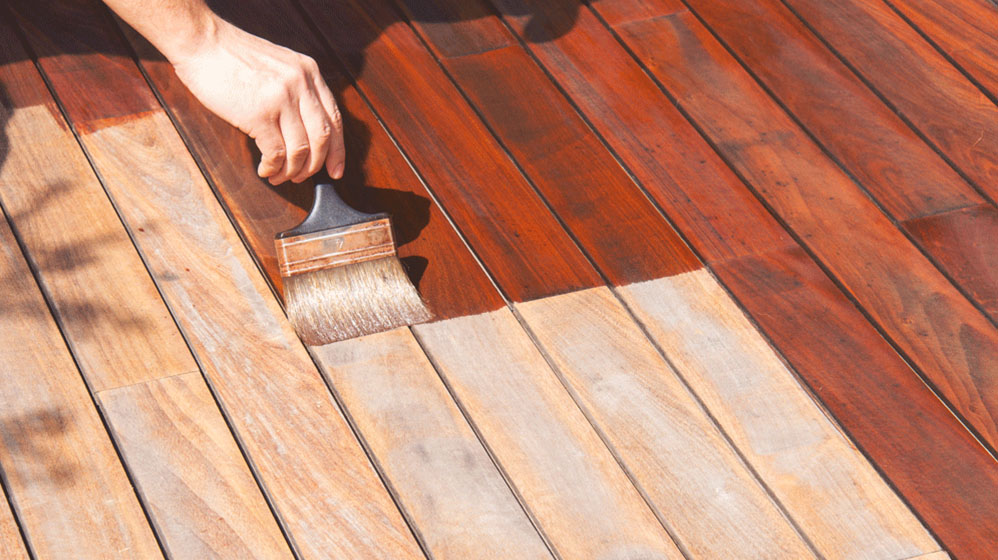
When it comes to protecting and beautifying wood surfaces—whether on decks, fences, siding, or outdoor furniture—stain choice is crucial. With a variety of stain types available, understanding their differences can help you select the right product for your project. Today, we’ll explore four popular stain options: translucent stain, semi-transparent stain, semi-solid stain, and solid stain.

1. Translucent Stain

What it is:
Translucent stain offers the lightest coverage among wood stains. It allows most of the wood’s natural grain and texture to show through while adding a subtle color tint.

Characteristics:
Very thin, transparent film
Highlights wood texture and grain
Usually formulated with a high concentration of transparent pigments or dyes
Typically lasts 1-3 years before reapplication

Ideal for:
Preserving the natural beauty of high-quality wood
Projects where maintaining the wood’s original look is desired

Pros:
Enhances natural wood grain
Provides UV protection
Usually easy to apply

Cons:
Less protection against weathering
Requires more frequent reapplication

2. Semi-Transparent Stain

What it is:
Semi-transparent stain offers a bit more color coverage than translucent stain, providing richer color while still showcasing the wood grain.

Characteristics:
Slightly thicker film than translucent stain
Provides a good balance of color and wood grain visibility
Lasts approximately 2-4 years

Ideal for:
Fences, decks, and siding where some color enhancement is desired but wood texture should remain visible

Pros:
Adds more color depth
Maintains visibility of wood grain
Good UV and weather protection

Cons:
Slightly more effort to apply evenly
Reapplication needed periodically

Semi-Solid Stain

What it is:
Semi-solid stain offers significantly more color coverage, with a thicker consistency that partially obscures the wood grain.

Characteristics:
Thicker, more opaque than semi-transparent stains
Provides a richer, more uniform appearance
Typically lasts 3-5 years

Ideal for:
Older or weathered wood that needs more camouflage
Projects where a more uniform color finish is desired

Pros:
Better concealment of imperfections
Longer-lasting protection

Cons:
Slightly less of the natural wood grain shows through
More challenging to apply smoothly

4. Solid Stain

What it is:
Solid stain is the most opaque, offering full coverage similar to paint but with the benefits of stain.

Characteristics:
Thick, paint-like consistency
Completely covers the wood surface, hiding grain and texture
Usually lasts 5+ years

Ideal for:
Covering heavily weathered or damaged wood
Achieving a uniform color or decorative finish

Pros:
Excellent concealment of imperfections
Long-lasting and highly protective

Cons:
Does not showcase wood grain
More difficult to apply evenly
May peel or chip over time if not properly prepared

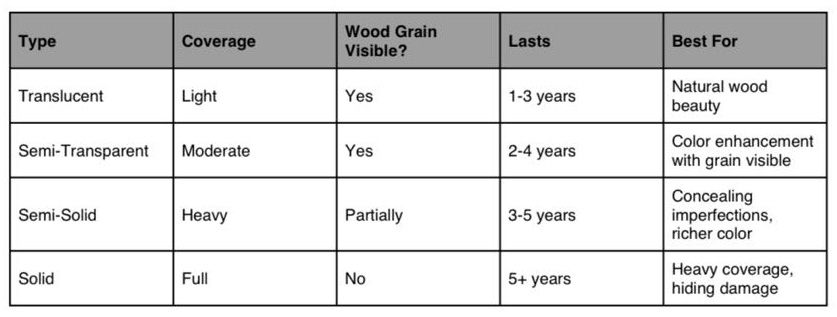
Summary Chart

summary chart
summary chart

Final Thoughts

Choosing the right stain depends on your aesthetic preferences, the condition of the wood, and how much protection you want. If you love the natural look of wood, translucent or semi-transparent stains are ideal. For more uniform color and better concealment, semi-solid or solid stains are preferable.

Always remember to prepare your surface properly before staining, and follow manufacturer instructions for best results. Proper maintenance and reapplication will keep your wood surfaces looking beautiful and protected for years to come!

If you’re unsure which stain is right for your project, consult with your local hardware store experts or a professional contractor—they can provide tailored advice based on your specific needs.